
RECAP OMR 2026: AI Absurdities & Dependencies
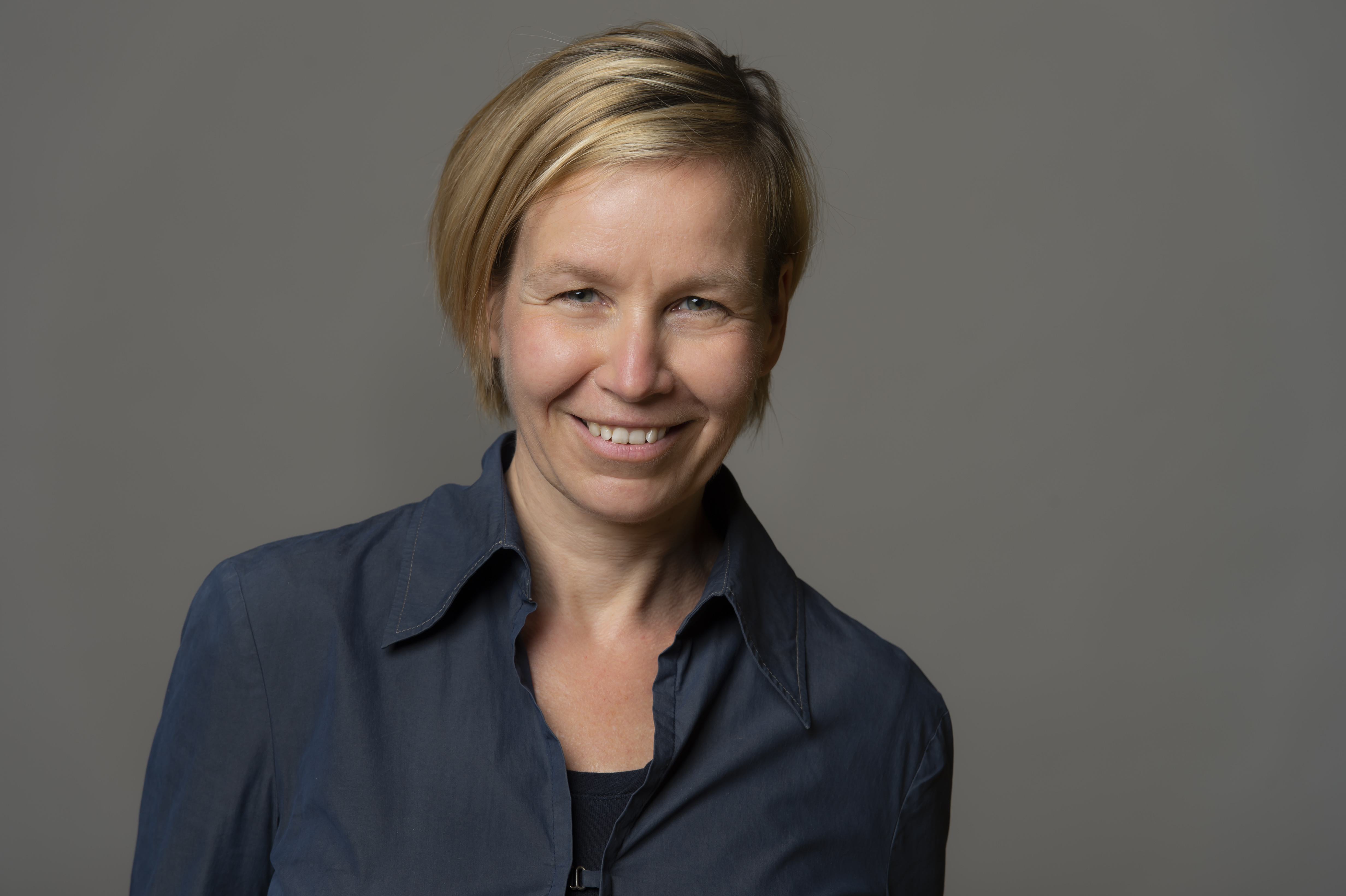
For those who are not familiar with OMR: OMR stands for Online Marketing Rockstars and has been a blueprint as FOMO business festival for the last 10 years. Born and raised in Hamburg by Phillipp Westermeyer, in 2026 70.000 trade visitors attended the festival. OMR ist a combination of conference, masterclasses and trade show and well known for its year-round community formats. https://omr.com/en

The annual OMR wave has come to an end, yet its messaging leaves one increasingly at a loss. One thing remains clear above all else: live marketing continues to be relevant. That was a clear takeaway from this online marketing festival. Trade fairs therefore remain well positioned as a marketing instrument. However, their communication and organisation will need to undergo substantial change.
OMR is brilliant to make the online world more transparent, while at the same time critical developments are also communicated and thereby promoted . Its communication relies on tools and channels that can at times feel rather disconcerting. Technological capabilities are too often viewed from a one-sided perspective and exploited to the fullest—no matter the consequences.
Example 1: Listicles
Websites remain important, but in a different way. At present, everyone is struggling with how to get their product featured in responses generated by LLMs such as ChatGPT or within Google’s AI overview. GEO is essential, but not yet a reality. A surprisingly common and somewhat questionable tactic is to publish a list of competitors on one’s own website, placing one’s own product at number one based on any criterion, regardless of genuine relevance.
LLMs favour such structures, current data, and clearly organised information. This can also be achieved via FAQ-style formats (so-called “chunking”), but listicles evidently offer a strong chance of being surfaced as the top recommendation in response to relevant queries. The source cited is one’s own website—but who actually follows up on that source, and how meaningful is that in the end?
Example 2: Wikipedia
In theory, companies cannot create Wikipedia entries about themselves; such entries are typically removed fast. What is remarkable, however, is that these entries do not simply disappear. They can still be scraped by LLMs and appear as Wikipedia sources. This effectively creates an opportunity to publish company content that continues to deliver value even after deletion. Really? While the OMR speaker did acknowledge this as “problematic”, it was nonetheless presented as an option. It may be possible. But to me, it doesn’t feel right.
Example 3: Website traffic continues to decline significantly
These figures were already presented at last year’s OMR: traffic is shifting massively towards LLMs. As a result, Google can currently be considered an AI frontrunner, largely due to its AI Overview feature. In addition, its proprietary hardware, data, and applications (such as Chrome and YouTube) provide a virtually unmatched advantage over competitors.
On average, an LLM like Claude retrieves information from a website around 71,000 times before the first actual user is directed to that site (Cloudflare Radar, Philipp Klöckner presentation, OMR 2026).
In light of this, it is understandable to be aware of examples 1 and 2. However, there are alternatives. For trade fair organisers, the fundamental requirement is to structure their information clearly while also tailoring it to specific customer segments. This requires a distinct positioning for each event, a genuine USP that goes beyond generic claims, and clearly articulated value propositions for different target groups. These elements must be in place before content can be translated into a format that is accessible and readable for LLMs.
Example 4: Careless use of AI models
In OMR talks with a high visibility, I would have liked to see a stronger focus on the issue of dependency. Claude by Anthropic is now often portrayed as the “morally sound” option compared with OpenAI’s ChatGPT models—or even more so compared to Chinese models such as DeepSeek. Claude also appears to deliver more precise and reliable answers than, for example, the latest ChatGPT model (Princeton University research, February 2026), and has become the clear favourite in B2B contexts, with very strong growth rates.
Many of us, including those in the trade fair industry, are facing a transition towards an agentic AI future, which would imply a maximum level of dependence on a small number of US-based companies.
Why is there so little discussion about alternatives and the risks associated with such dependency? In the business environment, Claude currently stands out alongside Microsoft Teams with Copilot—which itself is built on GPT and, more recently, Claude. High-quality open-source models, on the other hand, are almost exclusively coming out of China and must therefore also be approached with caution.
At least the French AI model Mistral is attempting to keep pace. It is usable and capable in many respects. Unfortunately, there are too few practical examples being presented to encourage its adoption. Simply relying on technology leaders in the United States—who also command by far the largest investment volumes—strikes me as a rather short-sighted approach. What implications does this have for risk assessment within organisations?
What does this mean for trade fair organisers and their teams?
A solid understanding of AI is currently essential in communications in order to make informed decisions about the efficiency of channels.
Holistic process expertise for customer journeys on exhibitor and visitors site as well as their counterparts in internal proccesses is crucial to becoming more efficient through automation and AI tools.
AI is becoming increasingly central to overall organisational and business development, as decisions around system adoption and switching carry long-term consequences.
Original text in German and written without AI assistance. Translation with Deepl, Image created using Canva.
Sources: Various talks at OMR 2026, including "State of the German Internet" (Philipp Westermeyer and Roland Eisenbrand), "Beyond the AI Hype" (Philipp Klöckner), "AI Search 2026: What Works – and What Doesn’t" (Malte Landwehr); "Towards a Science of AI Agent Reliability" (including Stephan Rabanser).


Comments